Award in Incident Command (ICL 1)
Course Overview
⏱️ Duration - 3 days
🎓 Certification Awarded SFJ Level 3
Develop the confidence, competence, and decision-making skills required to command operational incidents safely and effectively.
The SFJ Level 3 Award in Initial Incident Command is designed for both existing and aspiring Level 1 Incident Commanders.
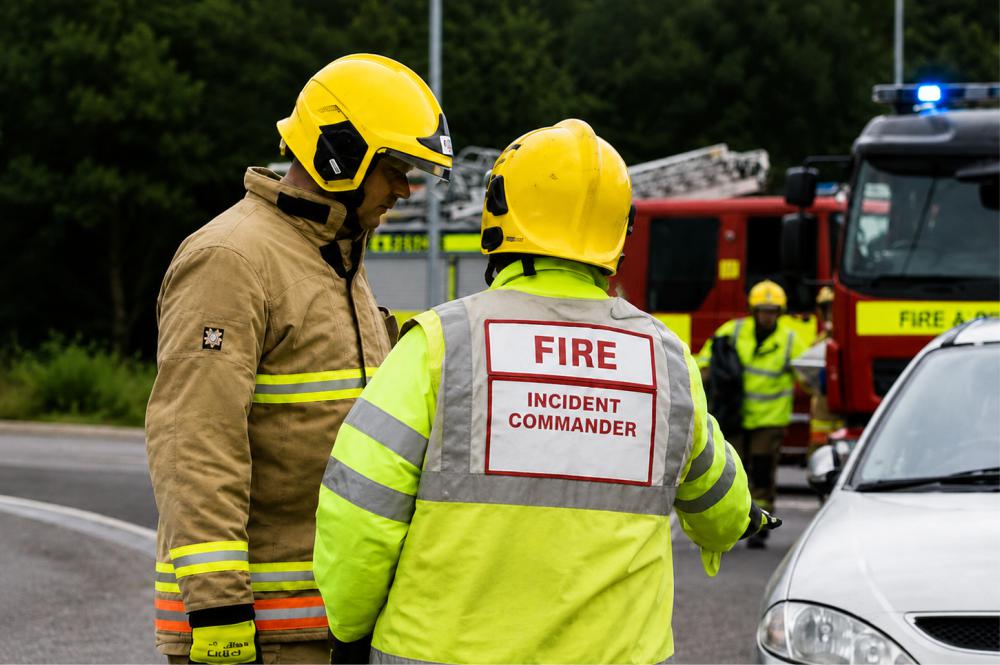
Through a blend of theory, practical exercises, and realistic incident simulations, delegates will develop the knowledge, skills, and behaviours required to assume command, manage risk, and lead emergency response operations.
The programme provides extensive opportunities to apply incident command principles in dynamic operational environments, enabling delegates to build confidence in making timely decisions, implementing tactical plans, and leading teams during emergency incidents.
Key Benefits
- Achieve the nationally recognised SFJ Level 3 Award in Initial Incident Command.
- Develop confidence in assuming command and leading emergency response operations.
- Enhance operational decision-making, situational awareness, and risk management capabilities.
- Apply command principles within realistic, scenario-based incident simulations.
- Gain practical experience performing key command team roles, including: Incident Commander, Deputy Incident Commander (2IC), Command Support Officer, Breathing Apparatus Entry Control Officer (BAECO), Breathing Apparatus Team Leader.
- Strengthen leadership, communication, and team coordination skills in high-pressure environments.
Who Should Attend?
This programme is suitable for:
- Existing Level 1 Incident Commanders seeking formal accreditation.
- Firefighters preparing to transition into supervisory or leadership roles.
- Crew Managers and Team Leaders responsible for managing operational incidents.
- Personnel identified for development into incident command positions.
- Emergency response professionals seeking to enhance their command and leadership capability.
What You Will Learn
Upon successful completion of the course, you will be able to:
- Understand the roles, responsibilities, and functions of personnel within the incident command structure.
- Apply dynamic risk assessment principles to manage operational risk effectively.
- Communicate clearly and effectively within a command environment.
- Gather, interpret, and evaluate information to support operational decision-making.
- Plan and implement an effective initial response to emergency incidents.
- Develop and communicate tactical plans to achieve operational objectives.
- Monitor and review incident progress, adapting plans as required.
- Manage the safe and structured close-down of incidents.
- Conduct post-incident reviews and identify opportunities for organisational learning and continuous improvement.
Entry Requirements
There are no formal qualification requirements for this programme. However, delegates should possess relevant operational experience and a sound understanding of emergency response operations.
Delivery Format
The programme is delivered through a blended learning approach, combining:
- Interactive e-learning modules
- Virtual classroom tutorials
- Practical face-to-face training exercises
- Realistic scenario-based incident command assessments
⏱️ Course Duration - 3 Days
🎓 Certification Awarded SFJ Level 3
Proven Track Record of Success
Trusted by over 5,000 professionals who have advanced their skills through our expert-led training programmes.
Need more information about our courses? Get in touch with us below!